13 October 2026
From Ladakh’s Mountains to Your Table: How Sea Buckthorn Berries are Harvested and Processed
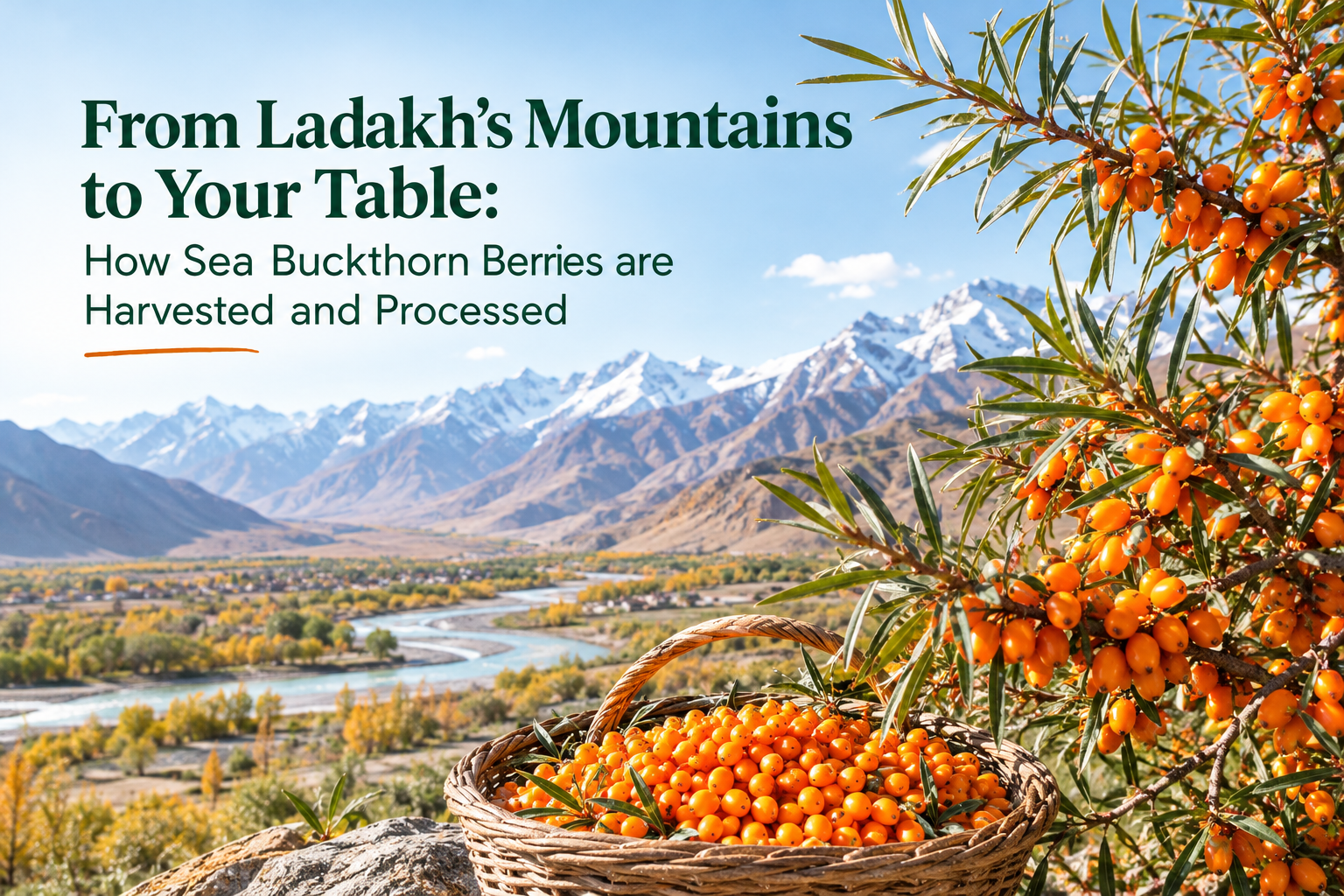
High in the mountains of Ladakh, where the climate is cold, the terrain is rugged, and the growing season is short, a bright orange berry thrives in challenging conditions. Known as sea buckthorn, this small fruit has recently attracted a lot of attention for its naturally occurring vitamins, antioxidants, and other plant compounds.
But how does sea buckthorn travel from thorny shrubs in the Himalayas to products such as juice, dried berries, powders, and oils? The journey involves careful harvesting, sorting, cleaning, and processing. Understanding these steps helps us appreciate the work behind this distinctive Himalayan fruit and what to look for when choosing sea buckthorn products.
Why Does Sea Buckthorn Grow in Ladakh?
Sea buckthorn grows naturally in parts of the Himalayan region, including Ladakh. It is a hardy shrub that can survive cold temperatures and challenging growing conditions. Its bright orange berries grow in dense clusters along branches covered with sharp thorns.
The plant is valued not only for its fruit but also for its role in the local landscape. Sea buckthorn shrubs can help stabilise soil and support land restoration, making them important in fragile mountain environments.
However, harvesting the berries is not easy. Their small size, delicate skin, and close attachment to thorny branches make collection a careful and labour-intensive process.
Step 1: Harvesting the Berries at the Right Time
In Ladakh, sea buckthorn berries are commonly harvested around September, although the exact timing depends on local conditions and the maturity of the fruit. The harvesting window is short, so collecting the berries at the right stage is important.
Traditional harvesting may involve placing a sheet beneath the shrub and gently beating the branches with a stick so that ripe berries fall onto it. The berries are then gathered and transferred to containers for transport.
Because the shrubs may grow in areas managed by the Forest Department, collection can also be subject to local permissions and harvesting rules. Responsible collection helps protect the plants and the surrounding environment.
Step 2: Sorting and Cleaning the Berries
After harvesting, the berries need to be prepared for processing. Leaves, twigs, damaged fruit, and other unwanted material are removed.
The berries are then washed using suitable potable water to remove dirt and other surface impurities. This step helps prepare the fruit for further processing.
Since sea buckthorn berries have thin skins and are easily damaged, handling them carefully is important. Fresh berries also have a relatively short shelf life, so timely processing or suitable preservation helps maintain their quality.
Step 3: Turning Fresh Berries into Juice and Pulp
Once cleaned, the berries can be fed into a pulping machine. This separates much of the juicy fruit pulp from the seeds and other solid material.
The resulting pulp can be used to make sea buckthorn juice and other food products. Depending on the processing method, the pulp may be filtered, blended, preserved, or packaged in different forms.
Sea buckthorn has a naturally tangy taste, which is why its juice or pulp is often consumed in diluted form or incorporated into drinks and recipes.
Processing methods vary from one manufacturer to another. Therefore, the final taste, texture, concentration, and nutritional composition can differ between products.
Step 4: Drying the Berries for Longer Storage
Fresh berries are not the only way to enjoy sea buckthorn. Drying helps reduce moisture, making the fruit easier to store and transport.
Depending on the intended product, processors may use natural drying, hot-air drying, or freeze-drying. Each method works differently and can affect the fruit's colour, texture, flavour, and nutrient retention.
Dried sea buckthorn berries can be used in several ways:
• Added to breakfast bowls, oats, or trail mixes.
• Used in selected tea and beverage preparations.
• Ground into powder for use in recipes.
• Incorporated into other food products.
Sea buckthorn powder may be made by grinding dried berries or by processing fruit pulp using a suitable drying method. The final composition depends on which part of the fruit is used and how it is processed.
Step 5: Extracting Sea Buckthorn Oil
Sea buckthorn is also used to produce oil. Two commonly discussed types are sea buckthorn seed oil and sea buckthorn pulp oil.
Seed oil is obtained from the seeds, while pulp oil comes from the fleshy part of the fruit. Their fatty-acid profiles differ, so the two oils are not exactly the same.
Depending on the intended use, the oil may be incorporated into supplements, skincare products, and other formulations.
When choosing a sea buckthorn oil product, check the label to understand whether it contains seed oil, pulp oil, or a combination. Clear ingredient information makes it easier to compare products and understand what you are buying.
How Is Quality Maintained During Processing?
The journey from berry to finished product involves more than harvesting and packaging. Good processing practices are important for maintaining product quality.
Here are some useful things to look for:
• Careful handling: The fruit should be protected from unnecessary damage and contamination.
• Suitable processing: The method should match the product being made, whether juice, dried berries, powder, or oil.
• Hygienic production: Cleaning, equipment hygiene, and suitable storage conditions are essential.
• Clear labelling: Ingredients, serving instructions, storage directions, and other relevant product details should be easy to find.
• Quality testing: Appropriate checks can help verify identity, purity, and product specifications.
Different processing methods can affect the final product in different ways. Therefore, it is better to look for transparent information about sourcing, ingredients, and quality checks rather than assuming that every sea buckthorn product has the same composition.
From Ladakh to Your Everyday Wellness Journey
Sea buckthorn's journey from a Himalayan shrub to an everyday product shows how traditional harvesting and modern food processing can work together. The berries can be made into juice, dried fruit, powder, and oil, offering different ways to use this distinctive fruit.
For consumers, the best choice depends on personal preference and intended use. Sea buckthorn juice or pulp can be added to drinks, dried berries can be used in recipes, and powders can be mixed into selected foods. Oils are used differently depending on their formulation.
Ayuzera offers sea buckthorn products in different formats, giving consumers options for incorporating the fruit into their routines. When choosing any product, check its ingredients, recommended use, storage instructions, and available sourcing and quality information.
Final Thoughts
From the cold mountains of Ladakh to the products on store shelves, sea buckthorn passes through several important stages. Harvesting requires care because the berries grow on thorny branches, while sorting, cleaning, processing, and storage help prepare them for different uses.
Understanding this journey also helps consumers make informed choices. Whether you prefer juice, dried berries, powder, or oil, look beyond the packaging and consider the ingredients, processing method, and quality information provided by the manufacturer.
Frequently Asked Questions
1. When are sea buckthorn berries harvested in Ladakh?
Harvesting commonly takes place around September, depending on local conditions and berry maturity.
2. Why is sea buckthorn difficult to harvest?
The berries grow in dense clusters on thorny branches, and their delicate skin makes them challenging to remove and handle without damage.
3. How are sea buckthorn berries processed after harvesting?
They are typically sorted and cleaned before being processed into products such as pulp, juice, dried berries, powder, or oil.
4. Are dried sea buckthorn berries different from fresh berries?
Yes. Drying removes moisture, changes the texture, and makes the berries easier to store. The drying method can also affect their nutritional composition.
5. How can I choose a good sea buckthorn product?
Check the ingredients, product type, processing information, storage instructions, and available quality-testing details. Choose a product that clearly explains what it contains and how to use it.